Ir al contenido principal

Buran vs Enterprise ;-)

Diferencias más importantes entre Buran y el Programa del Transbordador Espacial Estadounidense:
  • El Buran no es parte integral del sistema de lanzamiento, sino una mera carga del lanzador ruso Energía, que a su vez era capaz de lanzar otros tipos de carga de hasta 80 toneladas como la estación militar Polyus.
  • La duración de un vuelo típico era de 10 días, pero adicionando provisiones y combustible se podía extender hasta 30 días.
  • El orbitador Buran no tiene cohetes principales, liberando espacio y peso para cargas adicionales.
  • Los cohetes auxiliares («boosters») del cohete Energía usan combustible líquido (queroseno/oxígeno) en lugar de combustible sólido como el estadounidense.
  • El lanzador Energía, incluyendo sus motores principales, fueron diseñados en principio para ser completamente reutilizables, aunque posteriores recortes presupuestarios impidieron completar esta versión. El transbordador estadounidense posee motores reutilizables en el orbitador y motores auxiliares reutilizables, pero requiere un tanque de combustible externo que no es recuperable y se quema en la atmósfera.
  • El transbordador Buran puede poner en órbita baja unas 30 toneladas en su configuración estándar, en comparación con las 25 toneladas del transbordador estadounidense.
  • El índice de sustentación del aeroplano Buran es de 6,5 contra los 5,5 del transbordador estadounidense.
  • La carga con la que el Buran puede retornar de un vuelo orbital es de 20 toneladas, mientras el estadounidense sólo puede devolver 15 toneladas.
  • Aunque la protección térmica de ambos transboradores no tienen diferencias significativas, los ingenieros soviéticos opinaban que la suya era termodinámicamente superior.
  • El sistema de maniobra orbital del Buran utiliza oxígeno y queroseno en lugar de propelentes tóxicos, y tiene un rendimiento mayor.
  • La tripulación no experimentaba cargas-G mayores de 3.0 G durante el ascenso, y 1.6 G durante el re-ingreso.
buran.jpg
En la actualidad, los transbordadores Buran han sufrido maltrato y han sido vendidos casi como chatarra en algunos casos. El Buran 1.01 que probablemente estuvo en órbita fue destruido cuando el hangar donde estaba guardado colapsó debido a falta de mantenimiento, también matando a 8 personas.
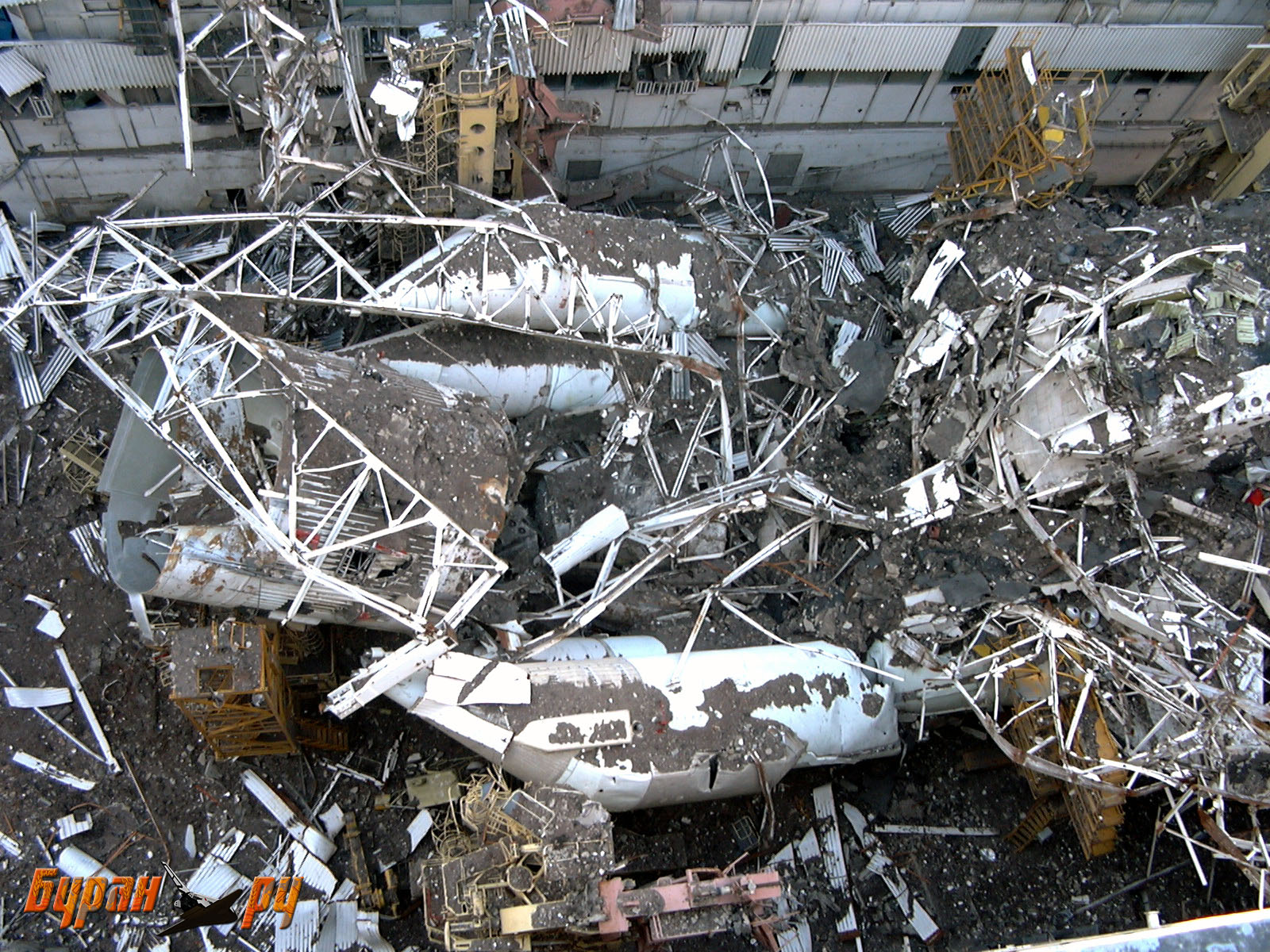
Fuente : alt1040

Comentarios

Entradas más populares de este blog

Capitán Raymar : Harlock

Captain Harlock ( 宇宙海賊キャプテンハーロック , Uchū Kaizoku Kyaputen Hārokku , lit. Space Pirate Captain Harlock ) is a fictional character created by manga artist Leiji Matsumoto . Harlock is the archetypical romantic hero, a space pirate with an individualist philosophy of life. He is as noble as he is taciturn, rebellious, stoically fighting against totalitarian regimes, whether they be earthborn or alien. In his own words, he "fight[s] for no one's sake... only [...] for something deep in [his] heart". The character first appears in Adventures of a Honeybee . (1953) The first series featuring Harlock in the lead role is 1978's Space Pirate Captain Harlock . As with most of Matsumoto's works, continuity is not a crucial issue. An appearance of any particular version of the character does not necessarily connect to any previous or following versions, and the interconnectedness of the various series is a common subject of speculation among fans. International releases...

Warp 11

Cuando pense que todo sobre Star Trek, podria estar cubierto, me encontre con esta banda de lunaticos llamados Warp 11, y su Capitan Karl. Miren la opiniones en EEUU: "Warp 11 is one of the best bands in America, not since KISS has a band had this level of shtick, and an amazing sound backing it up." - Mark S. Allen Premiere Radio Networks "Warp 11 is a Trek band that has crossed over from fandom to mainstream music." - Tammy Oler Geek Monthly "This isn't a bunch of Trekkies who decided to rock, but rather it's a buncha rockers who dediced the world of Star Trek was ripe with rockin' potential.. Warp 11 doesn't let any joke get by.. they're so gloriously vulgar!" - Jerry Perry Alive & Kicking "Sactown's own Warp 11 are the bad boys at the Trekkie convention." - Justin Allen Sacramento News & Review "It's Dead, Jim - a typically ass-kicking release from the Warped ones." - A.L. Sirois Sci Fi Channe...

Free as in Freedom

Free as in Freedom interweaves biographical snapshots of GNU project founder Richard Stallman with the political, social and economic history of the free software movement. It examines Stallman's unique personality and how that personality has been at turns a driving force and a drawback in terms of the movement's overall success. Free as in Freedom examines one man's 20-year attempt to codify and communicate the ethics of 1970s era "hacking" culture in such a way that later generations might easily share and build upon the knowledge of their computing forebears. The book documents Stallman's personal evolution from teenage misfit to prescient adult hacker to political leader and examines how that evolution has shaped the free software movement. Like Alan Greenspan in the financial sector, Richard Stallman has assumed the role of tribal elder within the hacking community, a community that bills itself as anarchic and averse to central leadership or authority...